Boxed In: Why Your Takeaway Curry Loses Its Swagger on the Walk Home — and the Ten-Minute Revival
There is a specific disappointment that only a takeaway curry can deliver. You order the thing you always order. You eat it in the restaurant and it sings. You get it delivered, open the lid, and it tastes like a photocopy of itself — warm, orange, vaguely spicy, and somehow tired. The chilli is there but the perfume has gone. The sauce has the texture of wallpaper paste. The chicken is doing a passable impression of a pencil eraser.
Here's the thing: nobody in that kitchen did anything wrong. What happened to your curry happened in the bag. It happened in the twelve minutes between the pass and your kitchen table. And it is almost entirely fixable.
The sauna in your carrier bag
A takeaway curry leaves the kitchen at roughly 80°C, sealed in a container with a lid. Steam rises off the sauce, hits that cold plastic lid, condenses, and drips straight back into the food. Multiply that by four containers stacked together and you've basically built a tiny, greasy Turkish bath.
The result is a curry that has been both cooked and rained on. Water gets into the sauce. The volatile stuff — the coriander stem, the fresh ginger, the citrus edge, the toasted fenugreek — evaporates into the headspace and then gets trapped against the lid, where it either drips back as bland condensation or escapes the moment you peel it open. That's why the first sniff is often better than the first bite.
Meanwhile the sauce is cooling, the starch is setting, and the fat is separating. Curry is an emulsion — oil and water held together by sheer force of cooking technique. Cool it, jostle it in a rucksack, and that emulsion starts to give up. Coconut milk splits first. Cream-based sauces go grainy. Tomato-heavy ones tighten into something closer to ketchup than curry.
The survivors' league: which curries travel best
We put a spread of UK takeaway classics through the same test — thirty minutes in a warm bag, a five-minute walk, a lid-off tasting. Here's how they placed.
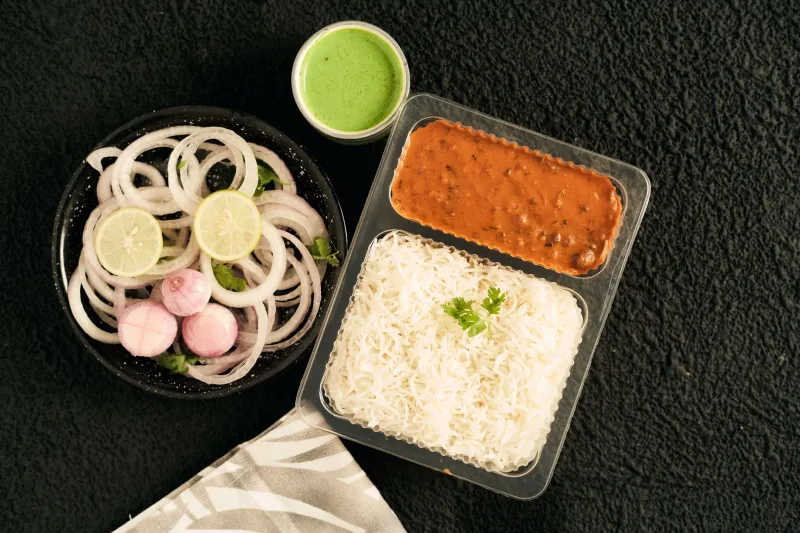
1. Dal. The undisputed champion. Thick, forgiving, and genuinely better after a rest. Lentils don't care about steam. If anything, the extra time lets the spices settle in.
2. Lamb rogan josh. Slow-cooked meat holds its texture, and that slick of fat on top acts as a lid of its own. The sauce comes back together with a stir and a bit of warmth.
3. Saag paneer. Spinach is robust and the paneer is dense enough to survive a jostle. It looks grim on arrival — all dark green and separated — but a gentle reheat brings the squeak back.
4. Jalfrezi. Drier sauces travel well because there's less water to trap. The peppers and onions keep some bite. The downside is that the sauce can tighten into a paste if it sits too long.
5. Chicken tikka masala. The nation's favourite, and a mid-table traveller. Volume of sauce helps, but that sweet-creamy thing flattens fast, and breast meat goes from tender to trouser belt in about twenty minutes.
6. Korma. Mild flavours have nowhere to hide. The cream splits, the sweetness dominates, and the whole thing starts to taste like a dessert that's lost its nerve.
7. Prawn curry. Bottom of the league. Prawns keep cooking in the residual heat, so by the time you open the lid they've gone bouncy. The steam also carries that shellfish note everywhere you don't want it.
The ten-minute revival
Ignore anyone who tells you to tip it into a screaming-hot wok. You'll boil off what little aroma is left and tighten the sauce into glue. The goal is gentle heat, restored emulsion, and a fresh top note.
Step one: lose the lid water. Open the container and pour off the liquid pooled on the inside of the lid. Do not stir it back in. That's steam, not sauce.
Step two: split the solids from the sauce. Fish out the meat or paneer with a slotted spoon. Warm the sauce separately over a low heat — a wide frying pan is ideal because more surface area means gentler, faster warming. Add a splash of water, not stock. Takeaway curry is already salty enough to survive a flood.
Step three: fix the emulsion. Once the sauce is warm but not bubbling, take it off the heat and whisk in a teaspoon of yoghurt or cream that you've warmed first in a separate bowl. Cold dairy into hot sauce is how you get grains. A small knob of butter works too, and so does a quarter-teaspoon of cornflour slaked in cold water if the sauce is genuinely thin.
Step four: wake it up. A squeeze of lemon or lime. A pinch of sugar if it's tomato-based and tasting flat. Fresh coriander, a few slivers of green chilli, some julienned ginger. If you want to go further, toast a quarter-teaspoon of garam masala in a dry pan for ten seconds and stir it through — the difference between raw spice powder and toasted spice is the difference between dusty and alive.
Step five: return the solids. Add the meat back for the last two minutes only. It's already cooked. You're warming it, not finishing it.
Rice, bread, and the two-minute rule
Rice firms up because the starch is retrograding — a fancy word for going claggy. Sprinkle a tablespoon of water over it, cover, microwave in 60-second bursts, then leave it to rest for two minutes before forking it through. The rest is not optional; it's what stops the grains turning into a single, mournful block.
Naan and roti want a damp paper towel and twenty seconds in the microwave, then thirty seconds in a dry hot pan to bring the char back. Chips, if you've gone rogue, want an air fryer and an apology.
The dal exception
Dal is the one dish you can genuinely improve at home. Loosen it with hot water, then make a quick tadka: a tablespoon of ghee or oil, a pinch of cumin seeds, a dried red chilli, a few mustard seeds, thirty seconds until they pop, then pour it over the top. That sizzle is the sound of a takeaway becoming dinner.
A word on the box
In 2026, more UK kitchens are venting lids and packing rice separately, and it makes a real difference. If you're ordering from a place that stacks everything into one bag and seals it tight, ask for the rice and the sauce in separate containers. It's a small request that buys you back most of the flavour you thought you'd lost.
Ten minutes, one pan, a lime, and a bit of patience. That's the whole trick. Your curry didn't die on the way home — it just got a bit steamed. Treat it kindly and it'll come back swinging.