Menu Mirage: Ranking Takeaway Photos by Their Bare-Faced Cheek
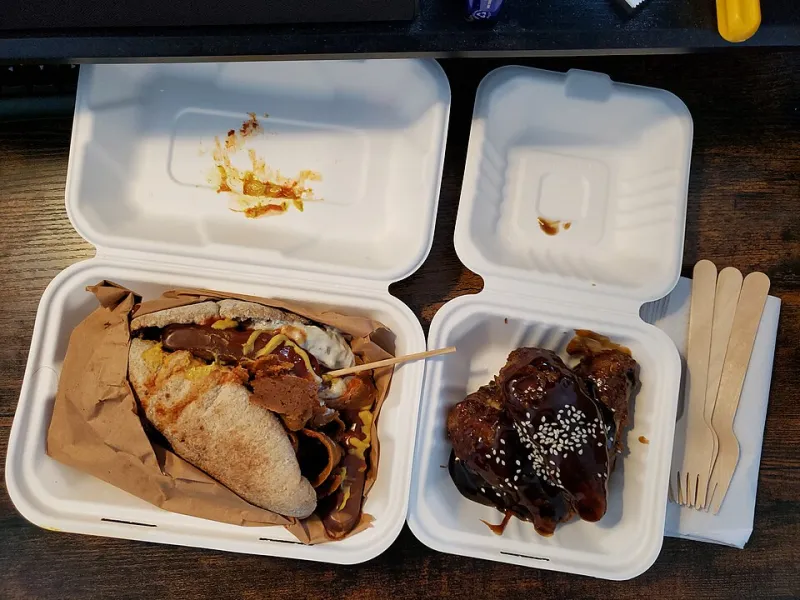
Photo: Andy Li, CC0, via Wikimedia Commons
There is a special kind of heartbreak that arrives not at the door, but on your phone. You open the takeaway app, see a burger the size of a church, a curry glowing like a stained-glass window, and chips wearing a cheese blanket so thick it should be insured. Twenty-five minutes later, a plastic lid opens and reality shuffles in wearing a damp cardigan.
Menu photography is an art form, and some takeaways are producing pure fantasy. So we have put on our forensic aprons and ranked the common offenders by how badly their photos lie. This is not about punishing ambitious photography. It is about the gap between the promise and the polystyrene.
The Ranking Rules
We judged each menu-photo type on four deeply scientific measures: the Promise-to-Plate Deficit, the Audacity of the Garnish, the Structural Integrity of the Stack, and whether a normal human could actually eat the thing without a forklift. Points were deducted for drizzle that has clearly been applied with a paint roller. Points were added for any photo that looked like it was taken by a staff member who was genuinely proud of the food.
6. The Curry House Cauldron — Mildly Optimistic
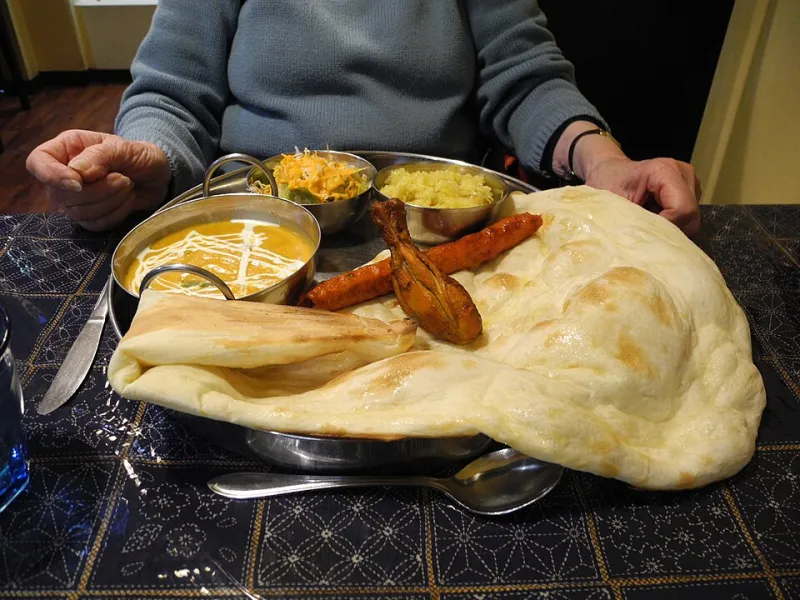
Let us start gently. The curry photo usually promises a copper bowl the size of a paddling pool, tender meat arranged with tweezers, and a swirl of cream so elegant it belongs in a gallery. What arrives is a foil tray of brown deliciousness that tastes better than it looks, which is the saving grace. This is not a malicious lie. It is more of a hopeful costume change. The curry house knows the food is good; it just wants the photo to wear a tuxedo.
Still, the portion-to-photo ratio can sting. If the menu image shows a lake of sauce and you receive a pond, you are allowed a small sigh. But you will probably forgive it after the first dip of naan.
5. The Kebab Mountain — Structurally Impossible
Kebab-shop menu photos are a genre of British folk art. The meat is always stacked like a geological formation, the salad is arranged by someone with a flower-arranging qualification, and the chilli sauce is drizzled in a way that suggests Picasso has retrained as a takeaway photographer.
The reality is usually a warm, gorgeous mess in a box: meat, salad, sauce, and a pitta that has quietly given up on life. Is it a lie? A little. Is it still one of the great late-night meals? Absolutely. The kebab photo is less a documentary and more a mood board. We rank it fifth because the food generally delivers on flavour even when it ignores the styling brief.
4. The Cheese Pull Pizza — A Dairy Fantasy
The cheese pull is the most cinematic trick in the takeaway photo playbook. A slice is lifted, and a rope of mozzarella stretches across the frame like a scene from a nature documentary. The pizza beneath it looks blistered, generous, and possibly capable of solving world peace.
Then your pizza arrives with a cheese layer that is more of a polite suggestion. The crust is fine, the toppings are fine, but the promised dairy waterfall has become a light drizzle. We rank this fourth because it is not the worst offender — pizza is rarely bad — but the gap between the advert and the box is often wide enough to park a moped in.
3. The Towering Burger — The Architecture of Lies
Here is the big one. The menu burger stands like a skyscraper: four patties, onion rings, cheese, bacon, a brioche bun that has clearly been to a personal trainer, and a wooden skewer holding it all together like scaffolding. It is a monument to ambition.
What turns up is a softer, squatter version that has collapsed under its own dreams. The bun is usually fine. The filling is usually tasty. But the photo has done something no real burger can do: it has made gravity optional. We rank this third because the betrayal is theatrical. You feel lied to, but you also feel hungry, and that confusion is the true flavour of modern Britain.
2. The Loaded Fries — Garnish With a Side of Delusion
Loaded fries are a brilliant idea and a terrible subject for a dishonest photo. The menu image shows a mountain of chips wearing melted cheese, spring onions, jalapeños, crispy onions, and a sauce drizzle that looks like it was applied by a calligrapher. The box arrives and the toppings are clustered in the middle like a small, nervous village.
The first few chips are excellent. Then you are left with a tray of plain chips and a few sad scraps of spring onion. This ranks second because the lie is so specific. You can see exactly what was promised, and you can see exactly what is missing. It is not a crime against food. It is a crime against topping distribution.
1. The ‘Feast for Two’ — A Crime Scene in Cardboard
And so to the champion of cheek. The ‘feast for two’ photo is a glorious tabletop sprawl: giant pizza, two burgers, ribs, wings, chips, dips, and a salad that nobody ordered but everyone respects. It is less a menu image and more a human-rights claim.
The reality often arrives as a series of smaller boxes that add up to a nice meal for two reasonably hungry people, but not the banquet of legend. The photo has used perspective, props, and possibly a borrowed table from a hotel lobby. We rank it number one because it does not just exaggerate one item — it exaggerates a whole lifestyle. You are not ordering dinner. You are ordering the idea of a dinner that could only exist in a television advert.
In Defence of the Ugly Menu Photo
Not every takeaway is trying to pull the wool over your eyes. Some of the most trustworthy menus are the ones that look like they were shot on a phone by someone who had to stand on a chair. A slightly blurry photo of a real curry, taken under kitchen strip lights, is worth ten glossy images of a curry that has never existed.
Honest takeaways often show their food in the same containers it will arrive in. The chips are uneven. The sauce is a bit messy. The naan has a wonky edge. That is not a failure of photography; it is a receipt of authenticity. If the photo looks like it was taken five minutes before the menu went live, that is usually a good sign. If it looks like it was directed by a cheese company with a film budget, proceed with caution.
How to Spot a Truthful Menu Before You Order
First, look at the reviews. Customer photos are the great equaliser. They are not styled, they are not lit, and they are usually taken by someone who is already halfway through a chip. A menu photo can lie, but a review photo from a stranger with no filter is generally telling the truth.
Second, be suspicious of impossible scale. If the burger is taller than the drink, if the kebab meat is arranged like the Andes, or if the curry bowl appears to contain a small ocean, assume the photographer had a very good day. Third, check for repeated props. The same wooden board, the same tiny bowl of parsley, the same rustic table — these are clues that you are looking at a stock image or a very determined photo shoot, not Tuesday night’s actual tea.
Finally, read the small print. Words like ‘serving suggestion’ are doing a lot of heavy lifting. And if the photo shows a garnish that never appears in the actual dish — a sprig of mint on a doner, a lemon wedge on a lasagne — treat the rest of the image with a pinch of salt. Then order the salt and pepper chips anyway. Some lies are worth it.