Bread Winners: The Takeaway Breads That Earn Their Foil, Ranked
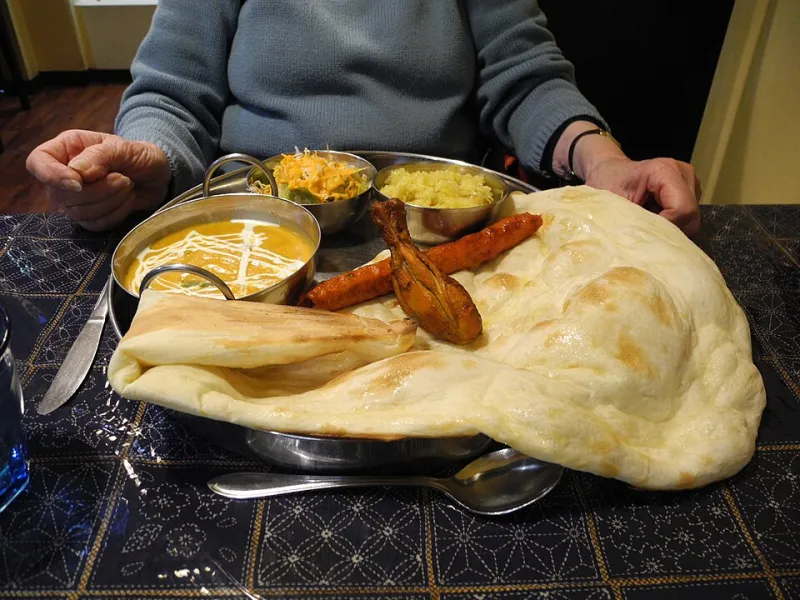
Photo: John Seb Barber from Leeds, UK, CC BY 2.0, via Wikimedia Commons
There is a moment, roughly four minutes after the takeaway lands on the kitchen table, when everyone realises the meal is short of bread. Not short of curry, rice or chips — short of something to tear, fold, dunk and drag through the good stuff. Bread is not a side order. It is the cutlery, the sponge and the insurance policy against a dry last bite.
In 2026, with delivery fees doing their best impression of a second main course, ordering extra bread feels less like greed and more like financial planning. But which bread earns its foil? We judged on four things: tear (does it pull apart nicely or fight back?), dip (does it hold sauce without turning to wallpaper paste?), walk-home survival (does it arrive warm and intact?) and leftover potential (would you eat it tomorrow without regret?).
How we judged
We are not scientists. We are people who have eaten curry in a hurry and regretted a dry pitta. The scoring is simple: a bread that cannot mop is a bread that cannot be trusted. A bread that goes leathery before the rice is open is a liability. A bread that improves with a fried egg the next morning is a public service.
The ranking
1. Paratha — the flaky champion
Paratha is the overachiever of the bread basket. It arrives with layers, a bit of crispness at the edge and enough oil to make it feel like a treat rather than a vehicle. Tear it into ribbons and it does not sulk. Dip it and it holds. The layers trap sauce like tiny edible pockets. Walk-home survival is strong because paratha is tougher than it looks, and leftover potential is excellent: warm it in a dry pan until the edges crisp, then shove a fried egg on top. That is not a leftover. That is Sunday brunch with a backstory.
2. Garlic naan — the people’s champion
Garlic naan is the bread that gets ordered before anyone has decided on the curry. Pillowy, blistered, glossy with butter and garlic, it is less a side and more an event. It tears beautifully, dips like a dream and has enough surface area to mop a bowl clean. The only risk is foil sweat on the walk home, which can turn the crust soft; ten minutes in a hot oven or air fryer brings it back. Leftover potential? Slice it, toast it, dip it in tomorrow’s soup. Your breath will be a talking point.
3. Roti and chapati — the quiet heroes
Roti and chapati do not shout. They are wholemeal, flexible and built for scooping. They tear cleanly, fold around a bit of curry without splitting, and mop with a quiet efficiency that makes you wonder why you ever bothered with anything fancier. They survive the walk home better than most because there is less butter to go sad. Leftover potential is solid: crisp them on a dry hob, or cut into strips and toast until they snap. They are the bread equivalent of a reliable mate who turns up with a van.
4. Peshwari naan — the dessert wildcard
Peshwari naan is sweet, coconutty and slightly controversial. It is not the bread you use to mop a vindaloo — unless you enjoy confusion — but it is the bread you order when you want the meal to end on a soft, sugary note. It tears well, though it can be dense in the middle. Dip it in nothing, or dip it in tea. Leftover potential is high because it is basically a flatbread pudding waiting to happen. Warm it, butter it, call it breakfast.
5. Kulcha — the stuffed curveball
Kulcha is the naan’s flashier cousin: stuffed, softer, often a bit richer. When it is good, it is very good — torn open, dipped, used to scoop up the last of a creamy curry. When it is heavy, it sits in your stomach like a paperweight. It survives the journey reasonably well, but leftover potential depends on the filling. Reheat it gently; a fierce blast will turn the stuffing dry. Order it when you want something a bit different, not when you need a reliable mop.
6. Pitta — the pocket optimist
Pitta has one job: be a pocket. For kebabs, it is brilliant. For curry, it is a gamble. It splits, it dries, and it can turn brittle at the edges before the chips are open. Tear? It tears, but not in a satisfying way. Dip? Briefly. Walk-home survival? Average. Leftover potential? Toast it into crisps or use it for tomorrow’s lunch. Pitta is not a bad bread, but it is not a mop. Keep it for the kebab shop, not the curry house.
7. Chippy barm — the chip butty contender
The soft white barm cake from the chip shop is a different beast entirely. It is not here to mop curry. It is here to hold chips, butter and maybe a bit of gravy if you are feeling reckless. It tears softly, dips well in gravy or curry sauce, and survives the walk home because it is basically a cushion. Leftover potential is low — a day-old barm is a sad thing — but fresh, with chips, it is a beautiful thing. Rank it last for curry night, first for chip night.
The breakfast clause
Before you bin the extra bread, remember this: a takeaway bread that cannot be reheated is a bread that has failed the long game. Paratha, naan and roti all come back to life with a little heat. Pitta and barm are better fresh. Peshwari naan is arguably better the next day. If you are ordering for two, order for three. The extra bread is not greed. It is tomorrow’s breakfast, and tomorrow-you will be grateful.
The verdict
Paratha takes the crown because it does everything: it tears, it dips, it travels and it makes a fried egg look like a plan. Garlic naan is the crowd-pleaser, roti is the quiet hero, and the rest have their moments. But the real winner is the person who orders an extra bread and eats it at 10am the next day, standing at the kitchen counter, with no regrets and a bit of sauce on their sleeve. That is not leftovers. That is Flavourz.