After the Shutters: The Secret Staff Plates That Never Make the Menu Board
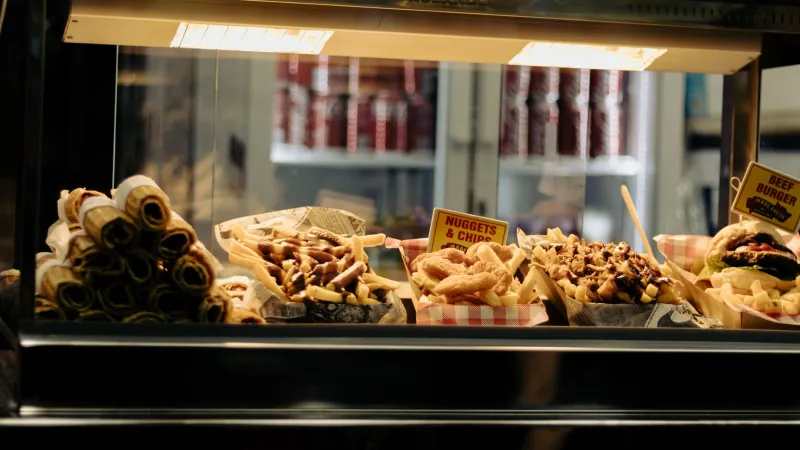
There is a moment in every takeaway's night that no customer ever sees. The last bag leaves the counter. The fryers get their first proper skim. Somebody turns the radio up two notches. And then, out of a kitchen that has spent six hours cooking for other people, drifts the smell of something you cannot buy.
That is the staff meal. The plate that gets made when the shutters are half down and the queue has gone home.
We spent a few weeks asking around - chippy owners, curry house chefs, the lads who run the kebab van on the ring road - and the answer was remarkably consistent. What they cook for themselves is faster, rougher, saltier and almost always better than the menu. Not because the menu is bad. Because the menu is a business, and dinner is personal.
The chippy: a barm cake and the crunchy bits
Ask anyone who has worked a Friday night fryer and they will tell you the same thing: the best thing in the shop is not the cod.
It is the scraps.
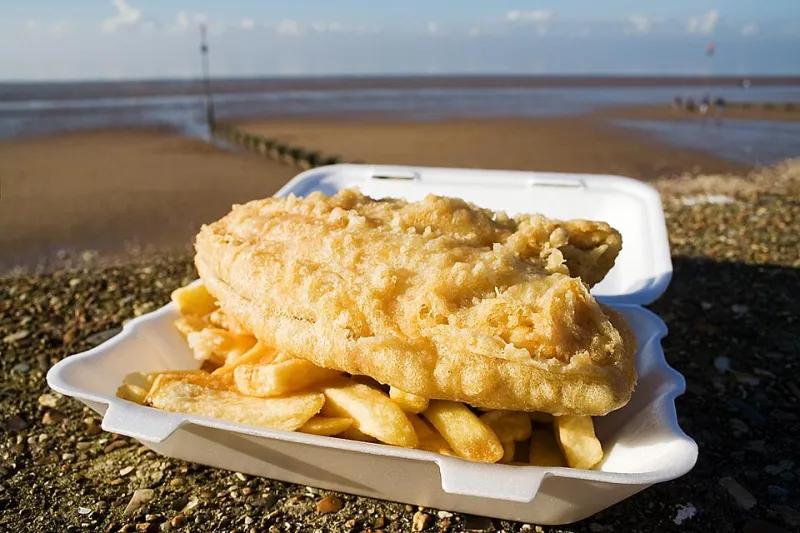
Down south you might hear them called batter bits, in Yorkshire they are bits, and in Scotland scraps are practically a human right - that pile of loose, over-crisped batter that comes free with a fish supper. Staff meals are built out of the stuff that never makes it to the counter: the broken fish, the two sausages that have been sat a minute too long, the pale chips from the bottom of the warmer that have gone chewy and, frankly, magnificent.
A common one is a soft barm or a plain roll, buttered, packed with chips, a split battered sausage, a ladle of curry sauce, and a fistful of scraps on top. Eaten standing up, out the back, in under four minutes. Another favourite is simply a polystyrene tray of chips drowned in the shop's own curry sauce with a pickled egg walloped on top - a combination that sounds unhinged until you have had it at 11.40pm.
Regional sauce loyalties do not vanish when the door locks. Edinburgh staff tend to reach for salt and sauce, Glasgow for salt and vinegar, and woe betide anyone who crosses the line.
The curry house: the family meal that never gets printed
In a British Indian restaurant kitchen, the dish that goes on the table after service is often called the family meal, and it is frequently the best food in the building.
It is rarely a customer curry. It is a dry chicken bhuna cooked hard and fast with the offcuts, a plain dal that has been simmering quietly at the back of the stove since five o'clock, a pile of chapati or rice, some salad, a spoon of something pickled. Sometimes it is a chef's home dish from back in Sylhet or Gujarat or Punjab, and it tastes of a completely different kitchen to the one making the korma.
The heat is the giveaway. Staff food is commonly hotter than anything on the menu, because the people cooking it have built up a tolerance that would flatten the average punter. This is the real reason your 'extra hot' request sometimes gets a polite nod and nothing more - the kitchen has a heat level above hot that it simply does not sell.
There is also a practical reason the good stuff stays off the board: consistency. A restaurant that puts a chef's one-off dish on the menu has to be able to reproduce it on a wet Tuesday in February with whoever is on the pans that night. The family meal has no such obligations, which is exactly why it tastes so free.
The kebab van: foil, chilli and a fried egg
Out on the A-road laybys and retail park edges, the staff meal is a foil parcel - meat trimmed off the rotating doner, a bit of chicken if there is any, onion, a fistful of salad that will not keep until tomorrow, and a serious slug of chilli sauce. If the van has a griddle, an egg goes in. Then it gets wrapped tight, left in the warmer, and eaten in the driver's seat on the way back to the depot.
Pizza counters have their own version: a folded base, leftover toppings, no sauce on top, blasted at full heat until the cheese catches. Basically a calzone that has given up on presentation.
Why none of it is on the menu
Three reasons keep coming up.
Cost and waste. Staff meals are built from things that cannot be sold. Putting them on the board means buying them properly, which changes the price entirely.
Speed. These are two-minute dishes. A menu item has to work at peak volume with a sixteen-year-old on the fryer and a queue out the door.
Pride, honestly. Several chefs said the same thing in different words: if a customer ordered the family meal and did not love it, it would feel personal. Better to keep it in the kitchen.
How to ask without being That Customer
You are not going to talk your way into a chef's actual dinner, and you should not try. But there is a polite version of this, and it works more often than you would think.
- Go early, not late. Mid-afternoon on a quiet Tuesday is when people have time to talk. 1am on a Saturday is not the moment.
- Ask what they eat, not for what they eat. 'What do you lot have when you finish?' opens a conversation. 'Can I have the staff meal?' closes one.
- Ask about the sauce. Curry houses and chippies will happily sell or hand over a pot of the house chilli, garlic or curry sauce. That is the gateway.
- Take the recommendation. If they say the lamb karahi off the specials board is what the kitchen gets excited about, order that. It is the closest thing to the inner circle you will get.
- Pay properly. If they do make you something off-menu, do not haggle. Tip like you mean it.
The Flavourz take
The menu is the shop's face. The staff meal is its personality, and it is usually hiding in plain sight - in the scraps, in the house sauce, in the specials board nobody reads, in the dal that has been on since five.
Next time you are standing in a quiet takeaway, skip the usual and ask the person behind the counter what they would cook for themselves. Worst case, you get a nice conversation. Best case, you get the best thing in the shop and a new regular order.